My About Page Was a Résumé in Disguise — Seven Rewrites Later, It's a Portfolio
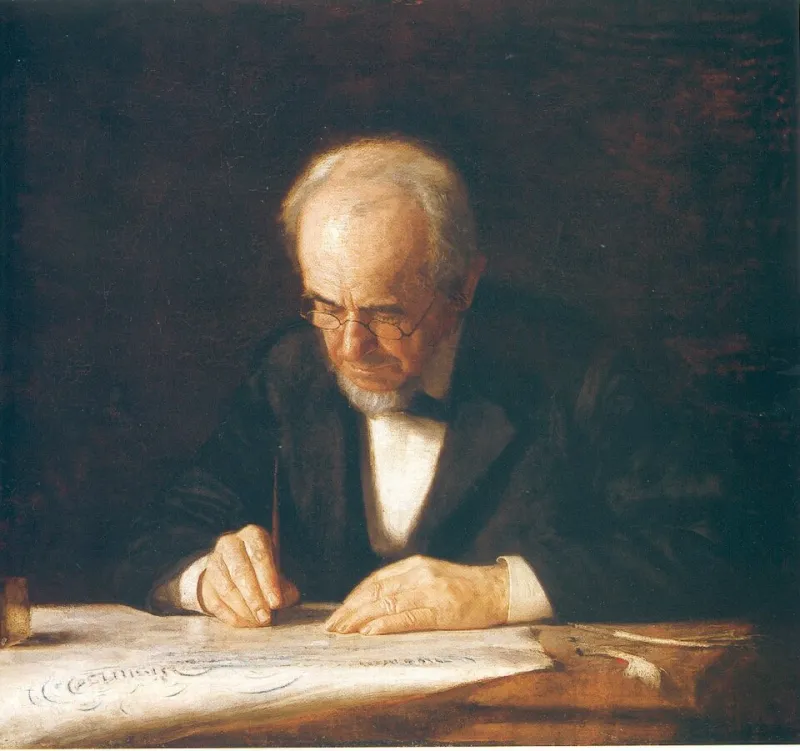
Photo: Thomas Eakins, Public domain, via Wikimedia Commons
The About page is the one page on nehajohsi.com I kept rewriting because it never felt right. Not because I didn't know what to say, but because I kept saying the wrong things to the wrong reader. I rewrote it seven times this year. Each draft failed in a useful way. Here's what I learned, plus the framework I use now.
Draft One: The LinkedIn Impression
My first pass was a list of accomplishments, a few press mentions, and the phrase 'results-driven creator.' It read like a résumé with a headshot. The problem: collaborators don't hire bullet points. They hire a person they can imagine working with. I was optimizing for a recruiter who wasn't coming.
Draft Two: The Origin Story Overload
Draft two went too far the other way. I started with childhood, then a long detour through every creative phase I'd ever had. People told me it was 'nice.' Nice is not the same as useful. An About page isn't a memoir. It's orientation. The reader needs to know who you are, what you make, and whether they should keep reading.
Draft Three: The Buzzword Smoothie
This one was the worst. 'Authentic storytelling, strategic partnerships, premium content.' It sounded like everyone. If your About page could be swapped onto another creator's site without anyone noticing, it's not doing its job. Voice isn't a tone you add at the end. It's the specific way you see the work.
Draft Four: The Apology Tour
Draft four was quietly insecure. I over-explained gaps and softened every claim with 'I know I'm not the biggest creator, but...' I thought I was being humble. I was actually undermining my positioning. Confidence isn't arrogance. It's clarity. You can be honest about where you are without apologizing for taking up space.
Draft Five: The FAQ in Disguise
Then I swung into logistics. Rates, timelines, deliverables, response windows. Useful information, but it landed cold. I had answered questions before I had established a reason to care. The page felt like a terms-of-service agreement with a font change.
Draft Six: The Collab Pitch
Draft six turned the whole page into a sales deck. Every paragraph pointed to a call to action. It was effective in the way a pop-up ad is effective. Collaborations need context, not a hard close. People want to know how you think before they want to know how to book you.
Draft Seven: The Portfolio With a Pulse
Draft seven finally balanced. It started with a point of view. It showed selected work instead of listing everything. It explained how I collaborate. And it ended with a warm, clear next step. It sounded like me because I wrote it the way I talk, not the way I thought a 'professional' should.
The Four-Part Framework I Use Now
1. Open with a point of view, not a job title. A sentence that says what you believe about your work. For example: 'I make content for people who want the behind-the-scenes, not the highlight reel.' That's more useful than 'creator and influencer.'
2. Show three proof points, not ten. Pick a collaboration you're proud of, a project that shows range, and a result that matters. Link to your portfolio. Don't turn the page into a client list. Curation is positioning.
3. Explain how you work with people. This is the collaboration layer. What's your communication style? What do you need to do your best work? What do you not do? Be human but specific. A collaborator should be able to picture the working relationship after reading this section.
4. End with a warm, clear next step. Not 'hire me.' Something like: 'If you're building something that needs a thoughtful creator, here's how to start the conversation.' Include a contact link and a realistic response time.
The Test I Run Before Publishing
Read it aloud. If it sounds like a cover letter, rewrite. If it sounds like you explaining your work to a friend over coffee, keep going. Then ask two questions: Would a collaborator know what it's like to work with me after reading this? Would a new visitor know what I actually do? If both answers are yes, you're close.
My About page is still not finished. It's a portfolio with a pulse now, not a résumé in disguise. That's enough for this year.